HGH Fragment 176-191: Uses, Benefits, Side Effects, and Scientific Overview (2026 Guide)
What Is HGH Fragment 176-191?
It is a synthetic peptide segment derived from human growth hormone (HGH). It corresponds specifically to amino acids 176–191 of the C-terminal region of the full HGH molecule.
Unlike full growth hormone, this fragment is studied primarily for its fat metabolism (lipolytic) activity, without the growth-related or IGF-1–mediated effects associated with complete HGH.
It is widely classified as a research peptide and is not an approved medication for weight loss or anti-aging therapy in most countries.
How it Works
HGH Fragment 176-191 is believed to act directly on fat cells (adipocytes) by influencing lipid metabolism pathways.
Proposed mechanisms include:
- Activation of lipolysis (breakdown of stored fat)
- Reduction of lipogenesis (formation of new fat cells)
- Stimulation of fat utilization for energy
- Selective action on adipose tissue without strong hormonal signaling
Unlike full HGH, it does not significantly activate the IGF-1 growth pathway, which is responsible for most systemic growth effects of HGH.
HGH Fragment 176-191 is a synthetic peptide consisting of the final 16 amino acids (176 through 191) of the human growth hormone (HGH) molecule. Researchers isolated this specific fragment to study its isolated effects on fat metabolism without triggering the growth-promoting or insulin-altering properties of full-length HGH. As a licensed pharmacy dedicated to patient education, we provide accurate, evidence-based information on metabolic research compounds like HGH Fragment 176-191 to help you understand its pharmacological profile and current investigative status.
HGH Fragment 176-191 vs Full HGH
| Feature |
HGH Fragment 176-191 |
Full Growth Hormone (HGH) |
| Fat loss effect |
Targeted (lipolysis-focused) |
Broad metabolic effects |
| IGF-1 increase |
Minimal/none |
Significant |
| Muscle growth |
Not supported |
Present |
| Blood sugar impact |
Minimal in studies |
Can increase insulin resistance |
| Medical approval |
Research use only |
Approved for specific conditions |
Possible Side Effects
Reported effects in studies and user-reported data include:
- Mild headache
- Injection site irritation (if injected)
- Temporary fatigue or lethargy
- Dizziness or lightheadedness
- Mild fluid shifts in some cases
Overall, it is often described as well tolerated in limited research settings, but long-term human safety data is not well established.
Safety Considerations
Important limitations include:
- Limited large-scale human clinical trials
- Lack of standardized medical dosing guidelines
- Product quality variability in unregulated markets
- Not approved for obesity or fat-loss treatment
- Unknown long-term endocrine effects
Because of these factors, it should be treated strictly as a research compound, not a therapeutic product.
Legal Status
it is generally:
- Classified as a research chemical or peptide
- Not approved as a prescription medication for fat loss
- Restricted or unregulated depending on jurisdiction
- Not permitted for use in many professional sports organizations
Always check local regulations before any handling or research consideration.
Safety Profile and Clinical Findings of HGH Fragment 176-191
Clinical trials evaluating this peptide in human subjects demonstrated a favorable safety profile. Phase II studies indicated that researchers observed no significant changes in blood glucose levels, insulin sensitivity, or IGF-1 (Insulin-like Growth Factor 1) concentrations. Because it lacks the systemic effects of full HGH, subjects did not experience common side effects like joint pain, water retention, or carpal tunnel syndrome. The most commonly reported adverse events were mild and comparable to placebo. However, because the compound did not achieve the expected commercial weight-loss milestones in later-stage trials, its primary status shifted to a research chemical.
Regulatory Status and Future Availability of HGH Fragment 176-191
It is crucial to understand that this product has not received FDA approval for human prescription or commercial sale. Regulatory agencies classify it strictly as a research peptide. Patients and researchers interested in metabolic therapies must consult qualified medical professionals. For the most current data on peptide research, you can review official registries like ClinicalTrials.gov (National Library of Medicine,) or the FDA’s Drug Development Pipeline.
Consult Your Pharmacist About HGH Fragment 176-191
As your trusted healthcare partner, our pharmacy team advises relying only on FDA-approved medications for clinical treatment. If you seek to manage metabolic health or body composition, speak with your doctor about approved therapies and the latest clinical research surrounding HGH Fragment 176-191. We remain committed to supporting your health journey with safe, evidence-based pharmaceutical guidance.
Frequently Asked Questions
Is HGH Fragment 176-191 the same as HGH?
No. It is only a small fragment of HGH and does not have the full hormone’s effects.
Does HGH Fragment 176-191 burn fat?
It is studied for potential fat-burning (lipolytic) activity, but human results are limited and not fully confirmed.
Does it build muscle?
No. It does not stimulate muscle growth or IGF-1 production like full HGH.
Is it safe?
Safety data is limited, especially for long-term use in humans.
Only logged in customers who have purchased this product may leave a review.


 Cart is empty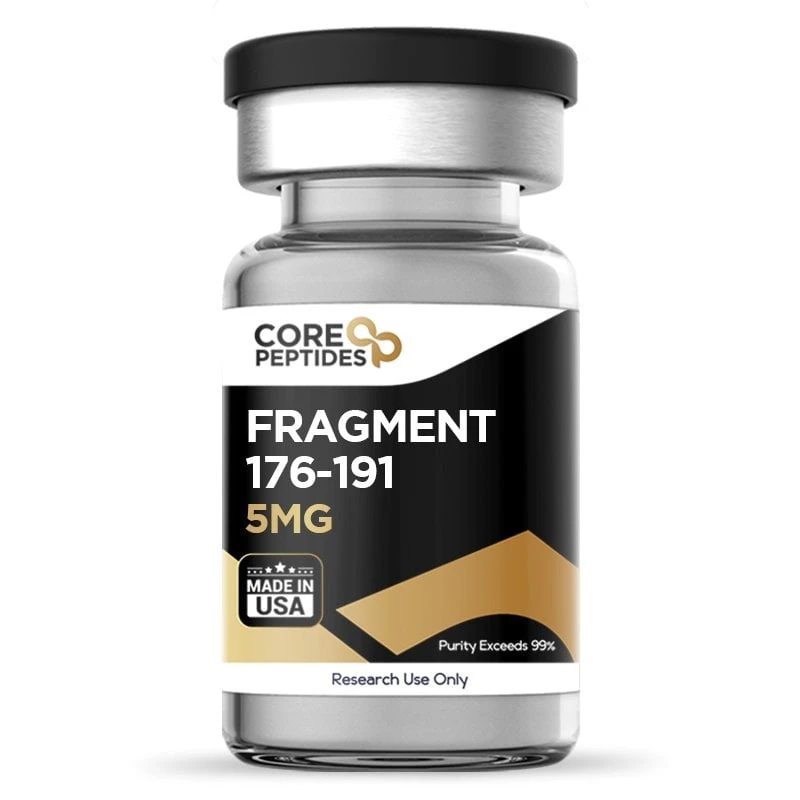


Reviews
There are no reviews yet.